Eating out with dietary restrictions, discreetly
A Google Maps dietary filter for diners with allergies and diets — find safe spots, discreetly.
TIMELINE
April 13, 2026 - June 13, 2026
ROLE
Product Design
TOOLS
Figma
Asher Hardy
Mason Oelschlager
Rayleen Marquez
/
The problem
Google Maps is where people choose where to eat. For people with restrictions, it barely helps.
/
Who I designed for
The diner who carries the whole decision alone.
Our users have high-stakes restrictions like severe allergies and celiac, plus intolerances and lifestyle or religious diets. The person who anchored my research was a college student with a Class 4 peanut allergy. A tiny amount gives her a rash and a fever. A real exposure means a blackout and an emergency injection. She eats out often, usually in groups, and she is the only one keeping track of what's safe.
/
Scope & constraints
Extend one feature of an app a billion people already use, in eight weeks.
/
Process: the insight + two directions
It started with one interview. I went in thinking about labels and data. I came out understanding that the real problem was social. My participant only tells close friends about her allergy. With bigger groups she stays quiet, even at a dinner where everyone ordered a peanut-heavy dish and she just didn't eat. When I asked what she'd actually want, she described our product before we'd designed it: "If I don't want to tell people I have a peanut allergy, I could search it on my own and then suggest a place." That reframed everything. The job wasn't only "help me find safe food." It was "help me stay safe without making my restriction everyone's problem."
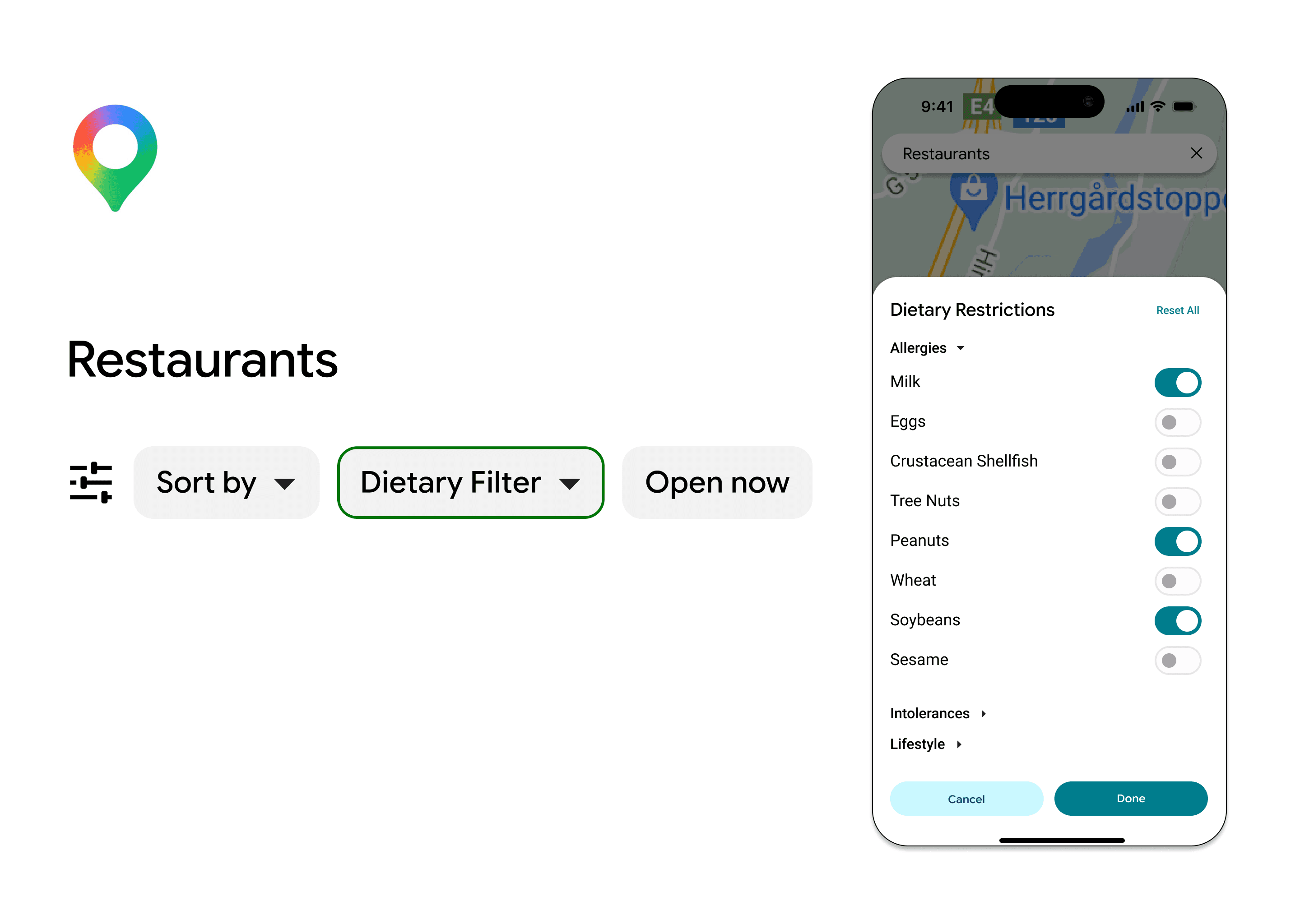
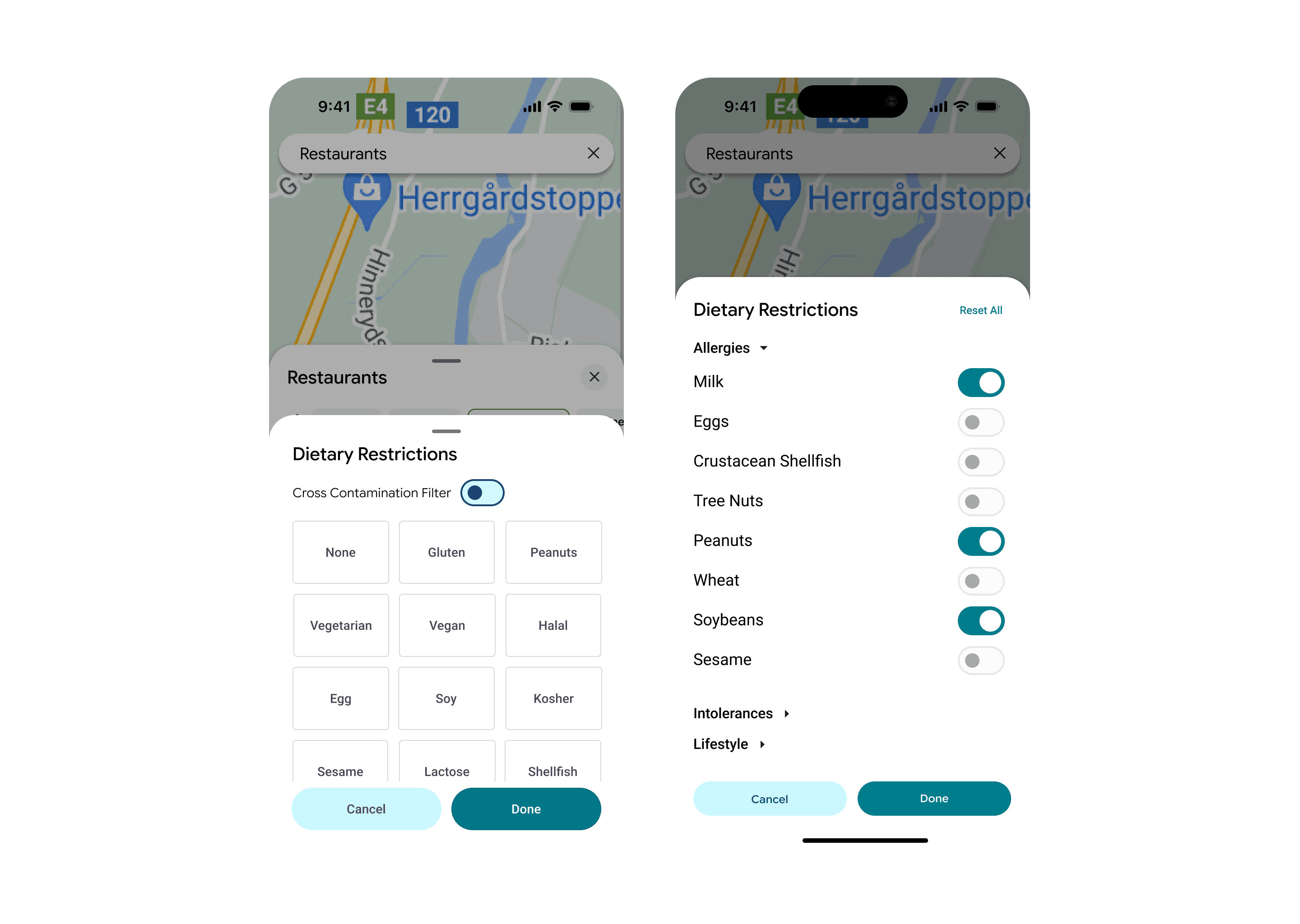
So I designed two directions instead of arguing over one. I built the filter entry and an alternative restriction picker in Figma, both made to look like real Google Maps, while my teammates built out the original picker, the results view, and the AI overview so the full flow held together. One direction kept the filter entry simple and familiar. The other organized restrictions into clear groups: allergies, intolerances, and lifestyles. I wasn't sure whether people would want simple or structured, so we made both real enough to test.
/
Process: testing settled it
My teammates ran a second round of testing with five people who have real restrictions, across allergies, halal, and keto. Neither version won outright. People preferred the simpler entry that felt like Maps, and they responded best to the version that organized restrictions into categories. So I built toward a hybrid: the familiar entry plus the categorized picker, combining the block layout people liked with the category grouping that made it readable. I had a favorite going in. The evidence picked the other parts, and the product got better for it.
Then I closed the gaps testing exposed. One tester could eat some soy but not all of it, and a simple on/off filter couldn't say that, so the picker needed a way to express partial tolerance instead of a flat yes or no. Testing also caught a wording problem: some people misread "Highlights" and didn't realize it meant the items matched to their restrictions, so that connection needed to be clearer.
/
The final design
A dietary layer that disappears into Google Maps.
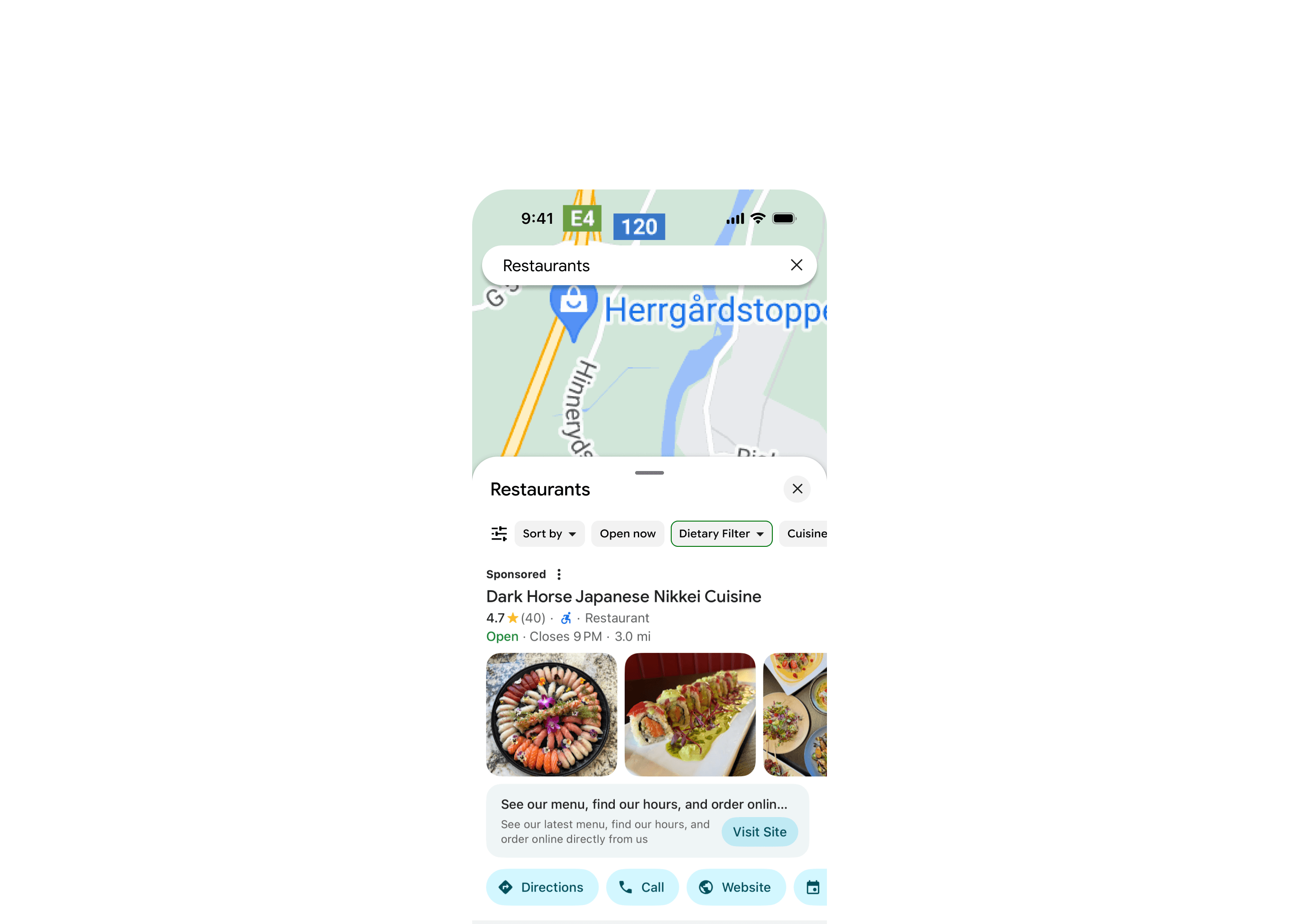
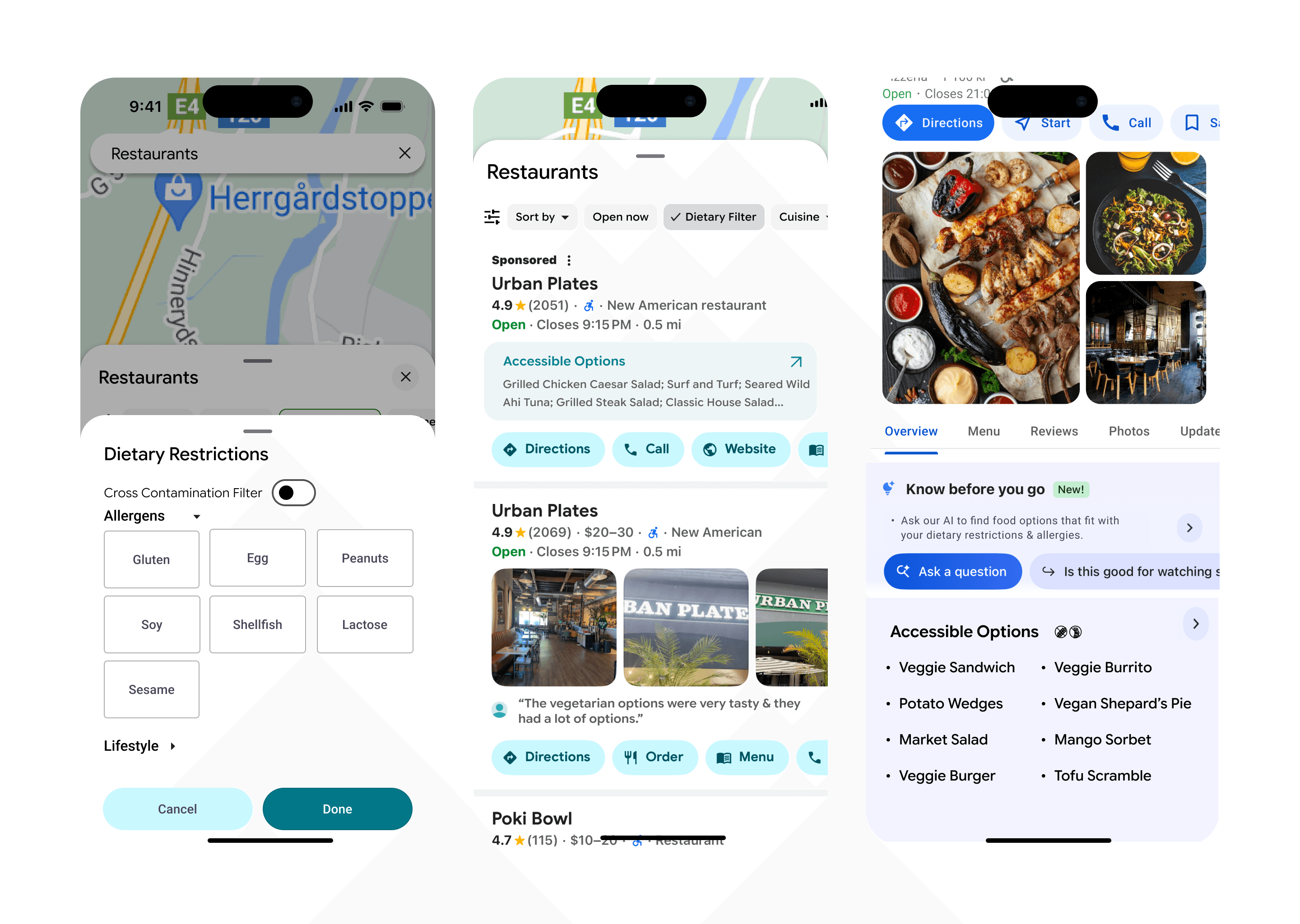
A filter that feels on without shouting: the dietary filter sits in Maps' normal filter row, and when it's active it shows a small checkmark and a count, so you can tell your restrictions are working without the screen listing every one.
A picker that's organized and precise: allergies, intolerances, and lifestyles as clear sections, with room for real-world nuance like partial tolerance. This is the screen that turns a yes-or-no filter into something a real person can trust for a real night out.
Trust you can see: an AI summary called "Know Before You Go" tells you what's safe at a place, with a small note on how confident it is, based on the menu and reviews. It was the most praised part in testing, and it's honest about the catch: restaurants don't always share their data.
/
Outcomes & reflection
OTHER
PROJECTS

Get in touch