Drift

(

(

3

3

)

)

TIMELINE

March 2026 (3-day design sprint)

ROLE

Lead Designer

Design Engineer

TOOLS


TOOLS

Figma

Figma Make

Claude

Claude Code

TEAM
TEAM

Christian Lee

/ About the project

Designing a speculative tool that makes time perception visible for ADHD minds.

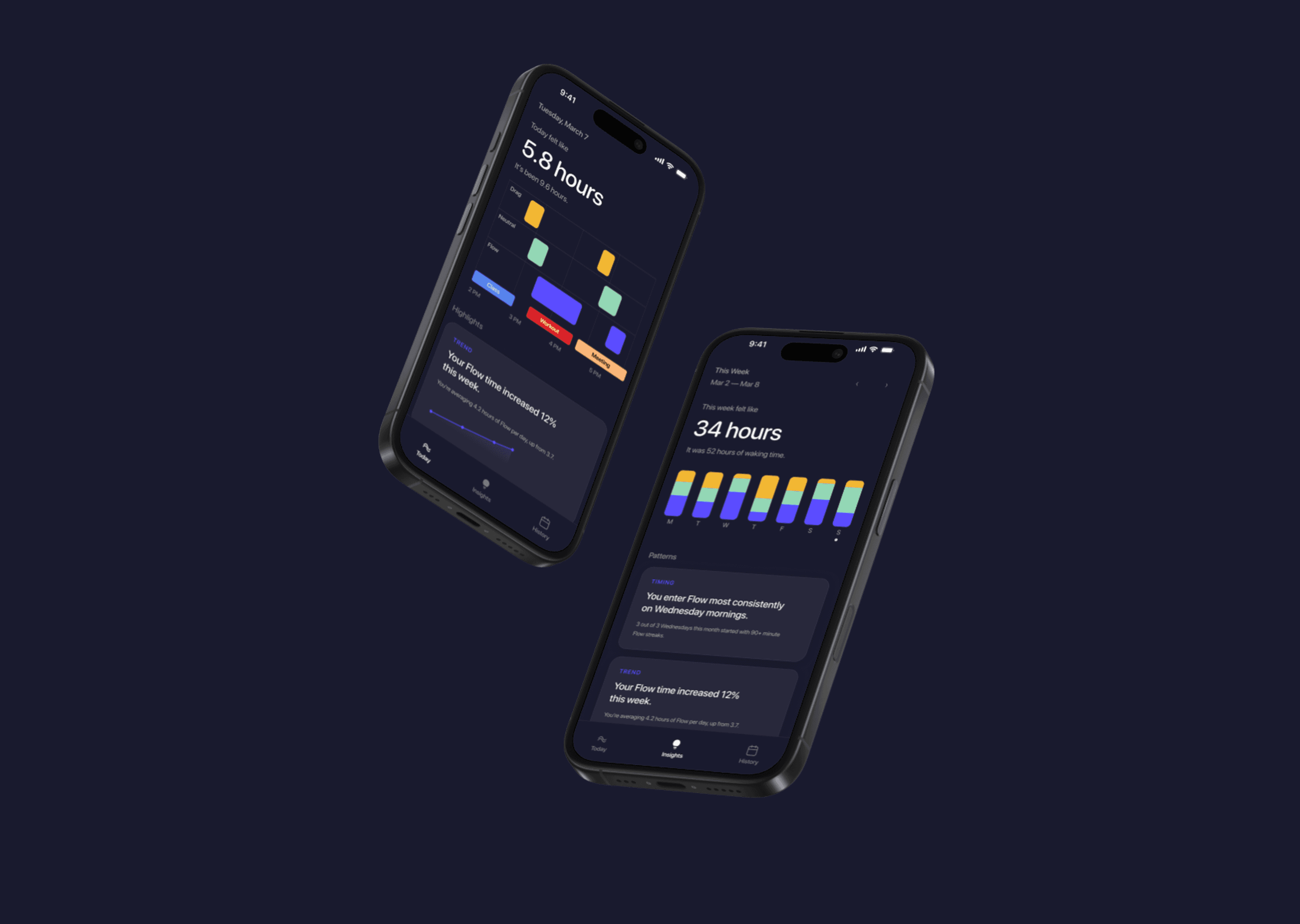
Drift is an Apple Watch + iPhone concept that tracks chronoception — the human sense of time passing — and surfaces patterns invisible to calendars and clocks. Built over a 3-day weekend sprint for FigBuild 2026, a student design competition hosted by Figma for Education open to university students across the US, Canada, India, and Australia, competing for $30,000 in prizes judged by designers from Meta, Google Labs, YouTube, Spotify, Microsoft, and Patreon.

/ About the project

Designing a speculative tool that makes time perception visible for ADHD minds.

Drift is an Apple Watch + iPhone concept that tracks chronoception — the human sense of time passing — and surfaces patterns invisible to calendars and clocks. Built over a 3-day weekend sprint for FigBuild 2026, a student design competition hosted by Figma for Education open to university students across the US, Canada, India, and Australia, competing for $30,000 in prizes judged by designers from Meta, Google Labs, YouTube, Spotify, Microsoft, and Patreon.

Identifying a sense no health app has touched.

Every health app tracks something external — steps, heart rate, sleep. But nothing tracks the one thing that shapes how every day actually feels: your perception of time. For people with ADHD, time blindness — the inability to accurately feel how time passes — affects over 5% of adults worldwide, yet no existing tool addresses it. Timers assume you'll hear them. Calendars assume you can feel deadlines. Productivity apps assume your internal clock works. For ADHD brains, that assumption is broken. We chose chronoception as our sensory experience: the brain's internal clock that assembles time from dopamine, attention, emotion, and memory. These distortions are bigger and more unpredictable in ADHD minds — and they've never been measured.

A framework of three temporal states — none good or bad.

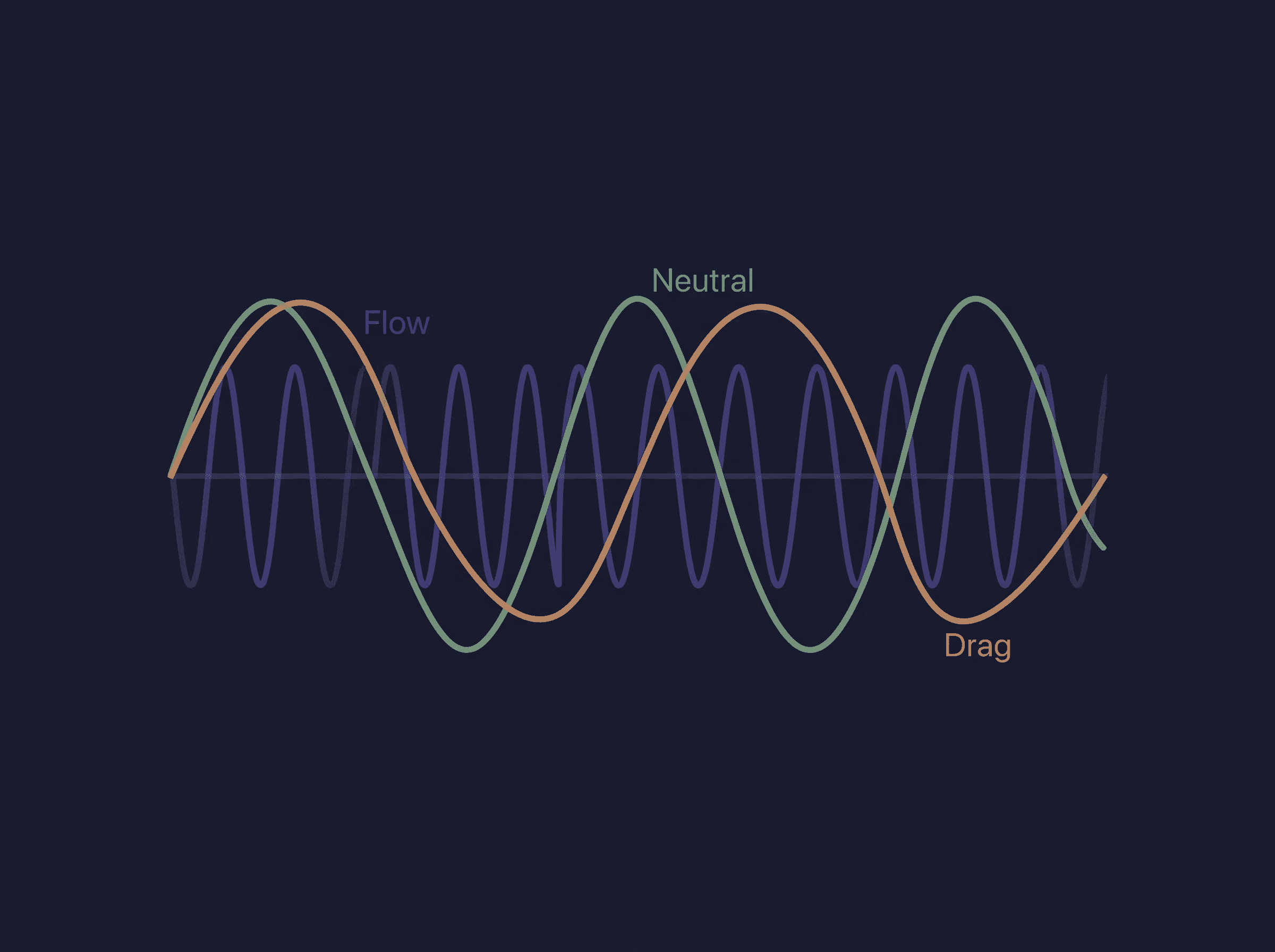
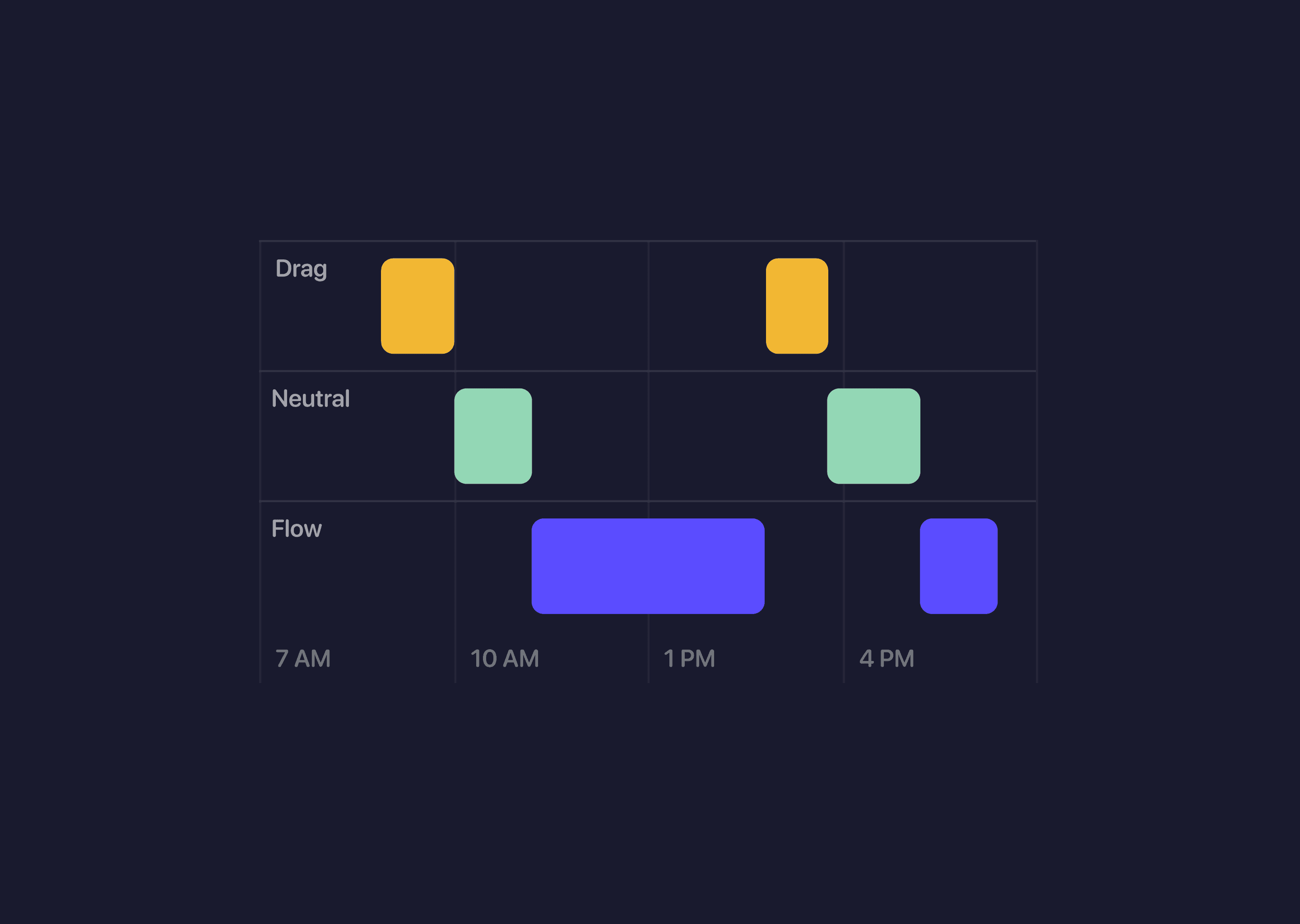
Drift tracks three states, each mapped to a distinct color: Flow (Indigo) — Time compresses. Hours feel like minutes. For ADHD, this is where hyperfocus lives — powerful, but sometimes a trap. Eight hours of gaming in Flow means missed meals and missed sleep. Neutral (Sage) — Time feels accurate. The clock matches perception. Present and balanced. Drag (Amber) — Time stretches. Minutes feel like hours. But a slow, peaceful morning in Drag is restorative, not a failure. Drift is a mirror, not a scorecard — it shows you your time and trusts you to decide what it means.
How it works — from silent sensing to evening reflection.

Designing a speculative tool that makes time perception visible for ADHD minds.

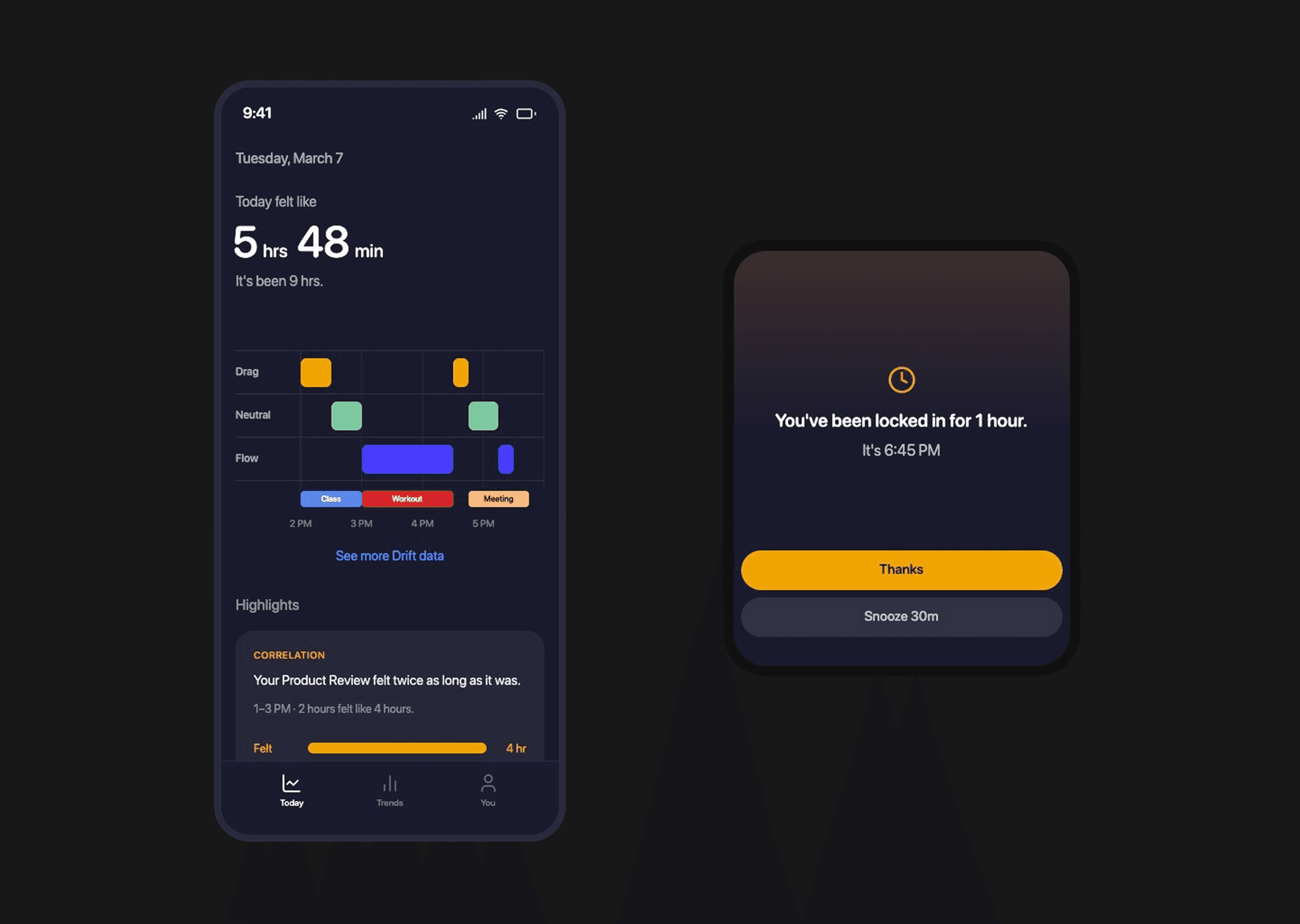
The Apple Watch already captures everything Drift needs. We mapped four biometric signals (HRV, heart rate, movement, wrist raises) to temporal states and applied research-backed multipliers: Flow compresses time by 0.5–0.7x, Drag stretches it by 1.3–1.8x. Two-second subjective prompts on the Watch calibrate each user's personal model over time. The Watch runs quietly all day. A complication shows Flow time at a glance. One-tap activity prompts log what you've been doing. And the key intervention: after 3+ hours of sustained Flow, a gentle haptic nudge — "You've been locked in for 3 hours. It's 10:24 PM." The iPhone is your evening mirror. Open Drift at night and your day is already there: "Today felt like 5 hrs 48 min. Drift tracked 9 hours." A state chart shows your day as swim lanes with calendar events overlaid. Insight cards connect activities to time perception. A journal that writes itself.
Drift is an Apple Watch + iPhone concept that tracks chronoception — the human sense of time passing — and surfaces patterns invisible to calendars and clocks. Built over a 3-day weekend sprint for FigBuild 2026, a student design competition hosted by Figma for Education open to university students across the US, Canada, India, and Australia, competing for $30,000 in prizes judged by designers from Meta, Google Labs, YouTube, Spotify, Microsoft, and Patreon.

Three use cases that show what changes.

Designing a speculative tool that makes time perception visible for ADHD minds.

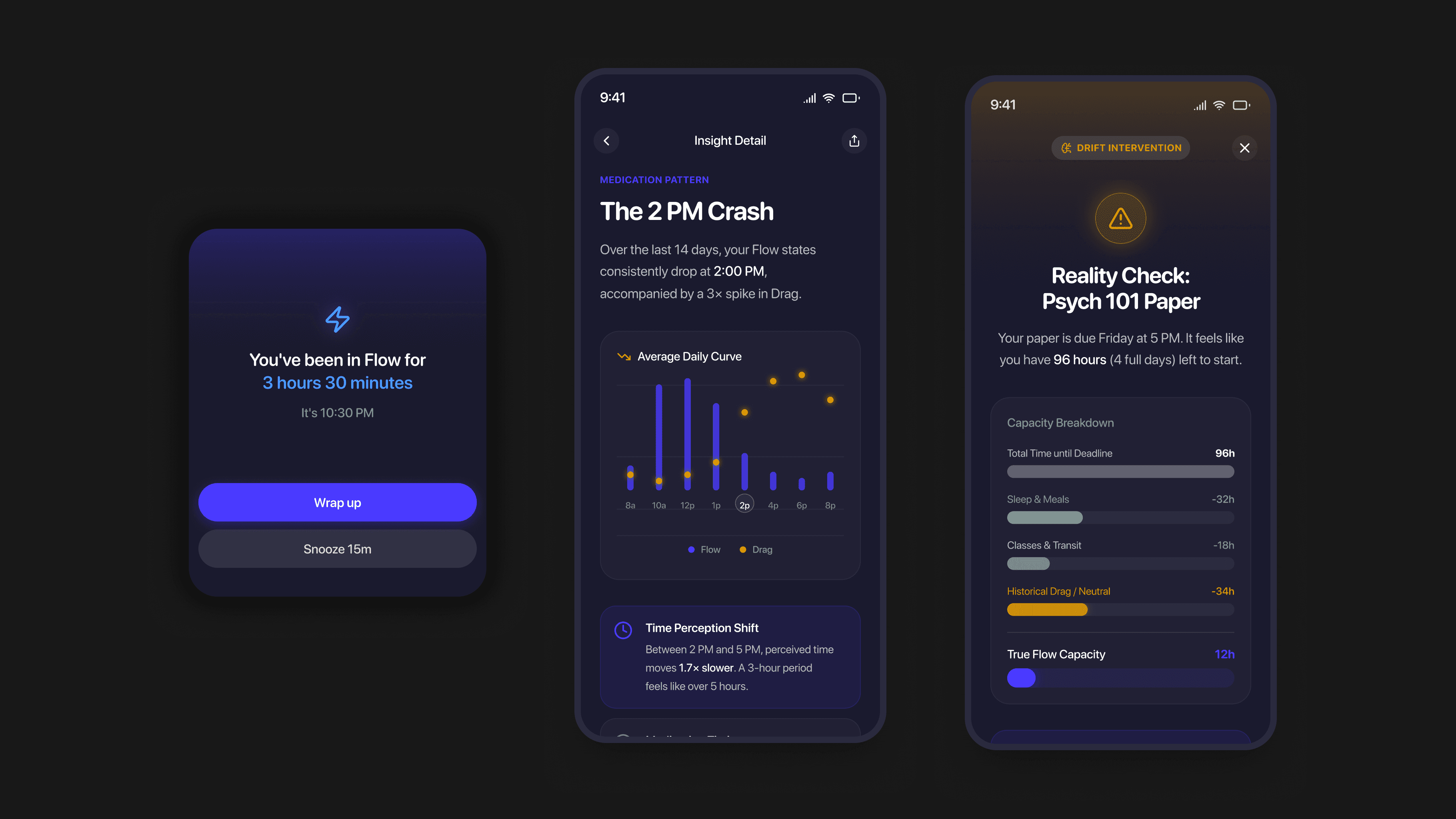
Jamie, 24, Software Engineer — The Hyperfocus Trap. Codes after dinner. 3.5 hours vanish — felt like 45 minutes. Drift nudges at the 3-hour mark. Over weeks, Jamie spots the pattern and sets a 9 PM boundary. Alex, 28, Grad Student — The Medication Curve. Takes Adderall at 8 AM. Drift reveals Flow crashing at 2 PM daily. Alex shares the Trends data with their psychiatrist. Together, they adjust timing. Sam, 21, College Junior — The Deadline Illusion. Paper due Friday. Monday feels like "plenty of time." Drift reframes it: "You have 16 hours of Flow left before Friday." The deadline feels real.
Drift is an Apple Watch + iPhone concept that tracks chronoception — the human sense of time passing — and surfaces patterns invisible to calendars and clocks. Built over a 3-day weekend sprint for FigBuild 2026, a student design competition hosted by Figma for Education open to university students across the US, Canada, India, and Australia, competing for $30,000 in prizes judged by designers from Meta, Google Labs, YouTube, Spotify, Microsoft, and Patreon.

Reflection

Designing a speculative tool that makes time perception visible for ADHD minds.

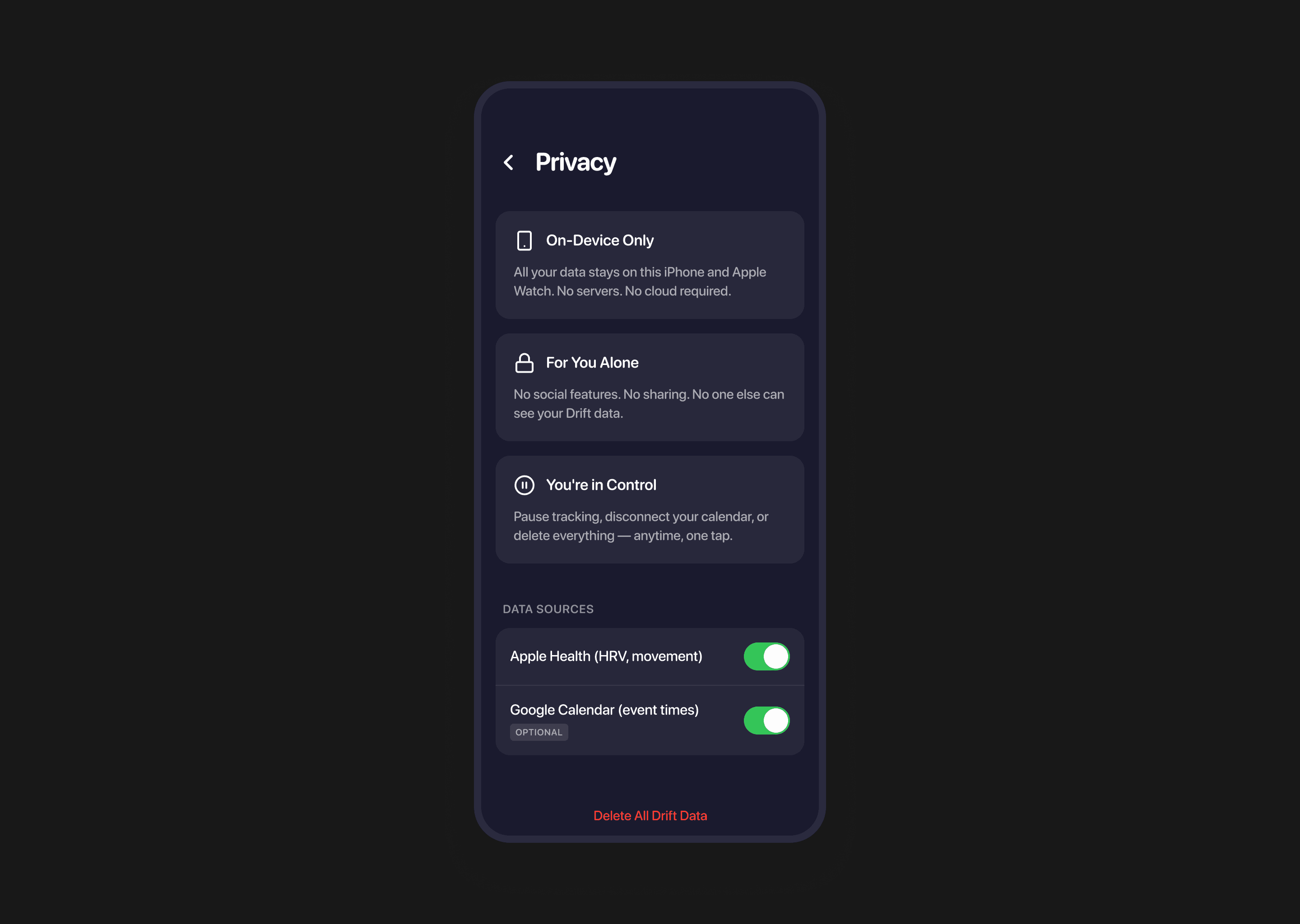
The biggest challenge was philosophical, not technical. We initially assumed Flow was "good" and Drag was "bad" — but research, including Csikszentmihalyi's own warnings about flow addiction, completely flipped our framing. Designing for ADHD users we don't personally experience added another layer: everyone we interviewed had different symptoms at different strengths, so there was no single experience to design for. The biometric sensing model was our answer to balancing accuracy with the reality that ADHD users won't respond to constant manual prompts. The most important design lesson was restraint. No real-time state display (prevents obsessive checking), no scores or streaks (prevents shame spirals), evening reflection only. All data stays on-device, no social features, with a pause mode for grief or overwhelm. Designing for time blindness means designing for vulnerability — we took that seriously.
Drift is an Apple Watch + iPhone concept that tracks chronoception — the human sense of time passing — and surfaces patterns invisible to calendars and clocks. Built over a 3-day weekend sprint for FigBuild 2026, a student design competition hosted by Figma for Education open to university students across the US, Canada, India, and Australia, competing for $30,000 in prizes judged by designers from Meta, Google Labs, YouTube, Spotify, Microsoft, and Patreon.

OTHER

PROJECTS

Get in touch