Switchless

(

(

1

1

)

)

A zero-to-one smart home command center that unifies five siloed sensors into one interface anyone can use.

TIMELINE

October 2024 – June 2025

ROLE

Product Designer

TOOLS

Figma

TEAM
TEAM

Kayley Vu

Warren Wu

Nicho Naugle

/

Overview

A single command center for a home that usually needs five apps.

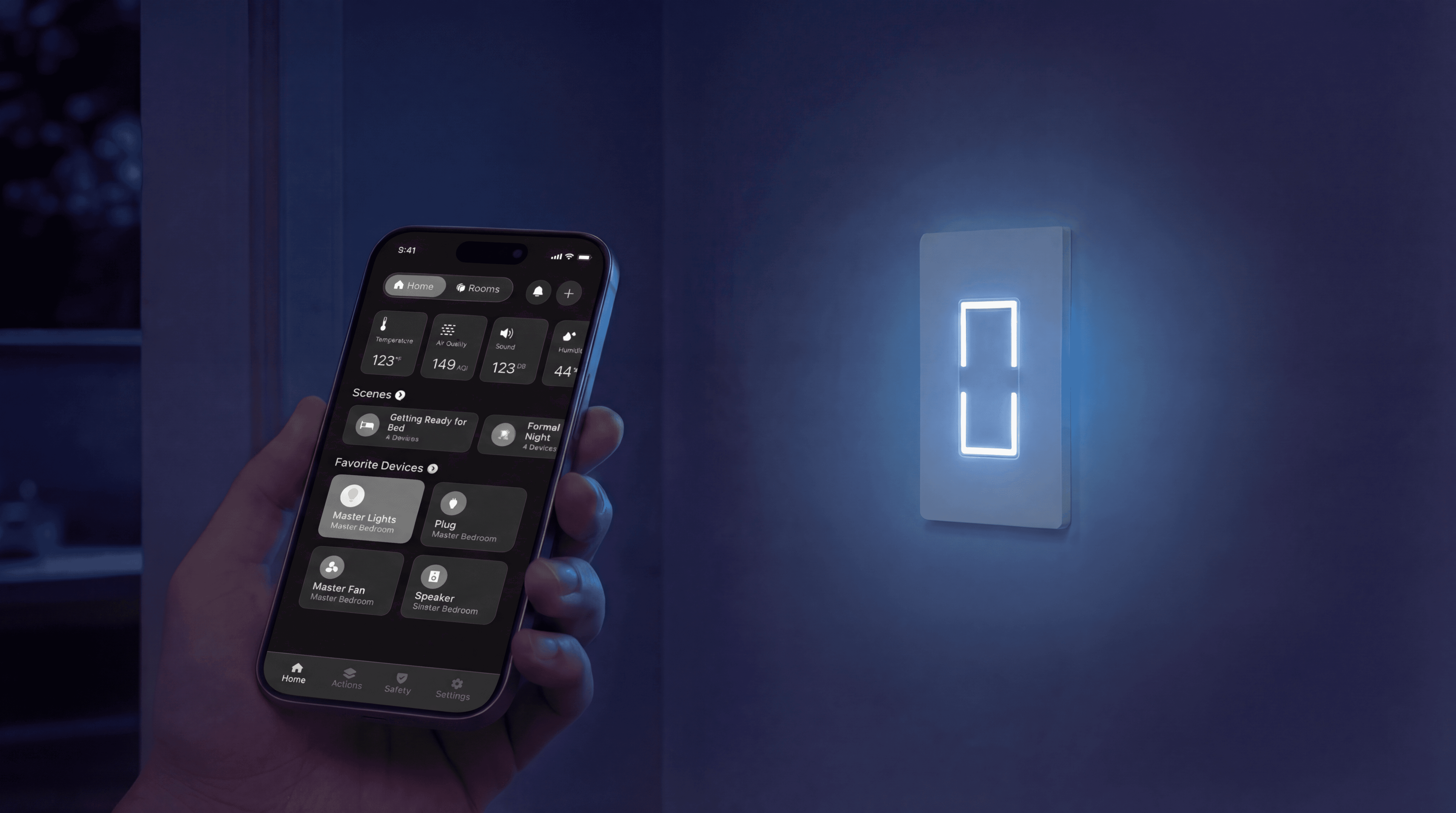
Switchless is a smart home system we designed and built from nothing: the hardware, the mobile app, and the logic connecting them. The goal was to make home automation work for mass-market users, not just the technical few.

So instead of shipping one more gadget, we designed the layer that ties everything together into a single place you actually want to open.

We led the end-to-end design of a cohesive hardware-integrated ecosystem from scratch, focusing on democratizing home automation for mass-market users.

/

Overview

A single command center for a home that usually needs five apps.

Switchless is a smart home system we designed and built from nothing: the hardware, the mobile app, and the logic connecting them. The goal was to make home automation work for mass-market users, not just the technical few.

So instead of shipping one more gadget, we designed the layer that ties everything together into a single place you actually want to open.

/

Problem

Five sensors, five apps, five things to keep track of.
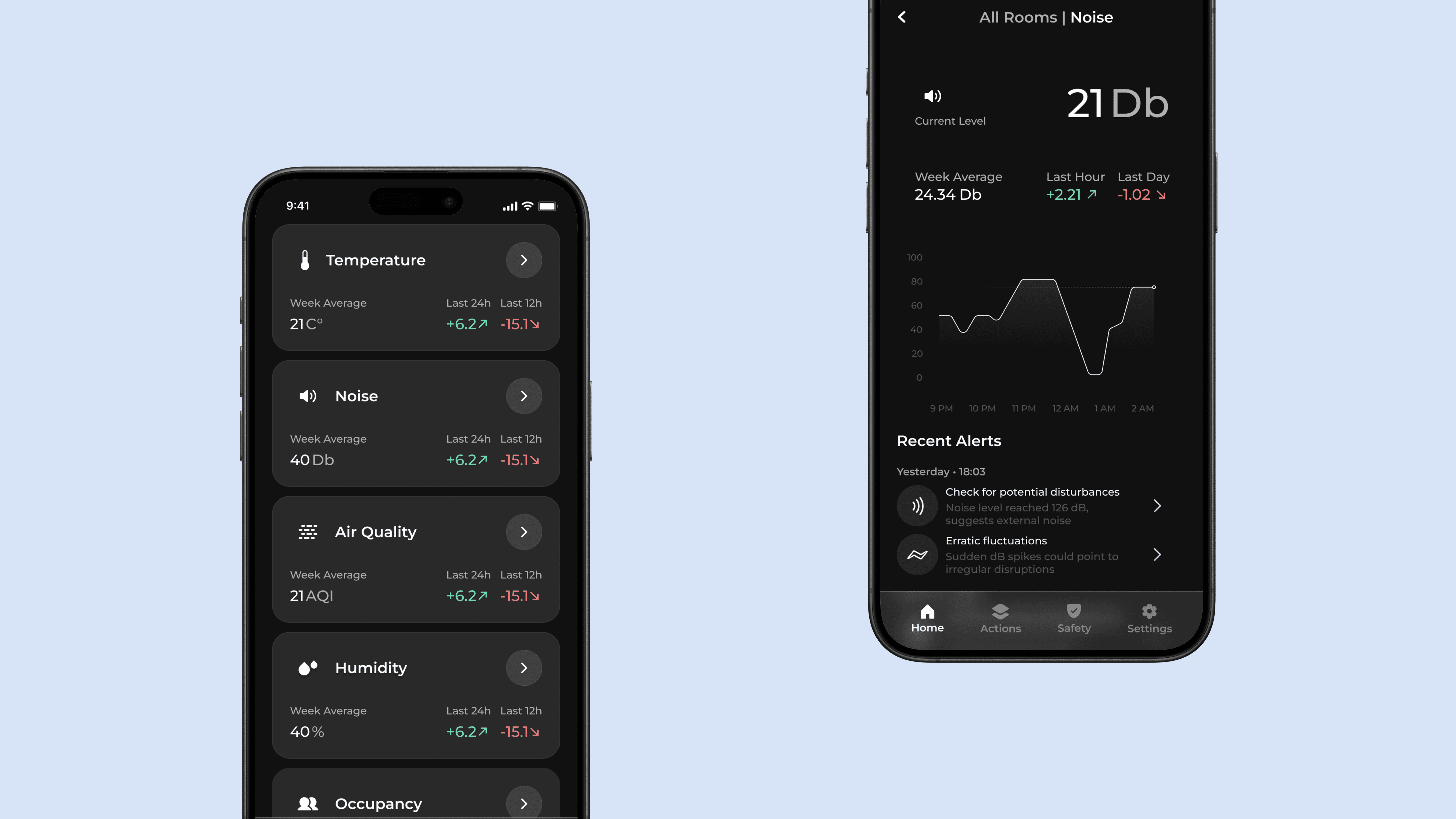
We kept hitting the same gap: people who want a smart home end up managing a pile of disconnected sensors, each with its own app and its own mental model. Temperature lives one place, humidity another, noise and air quality and occupancy somewhere else. That is more cognitive load, not less.

We unified all five into a single hardware logic and one dashboard, so a person holds one picture of their home in their head instead of five.

We led the end-to-end design of a cohesive hardware-integrated ecosystem from scratch, focusing on democratizing home automation for mass-market users.

/

Process

I mapped how the hardware and the app should talk, before either existed.

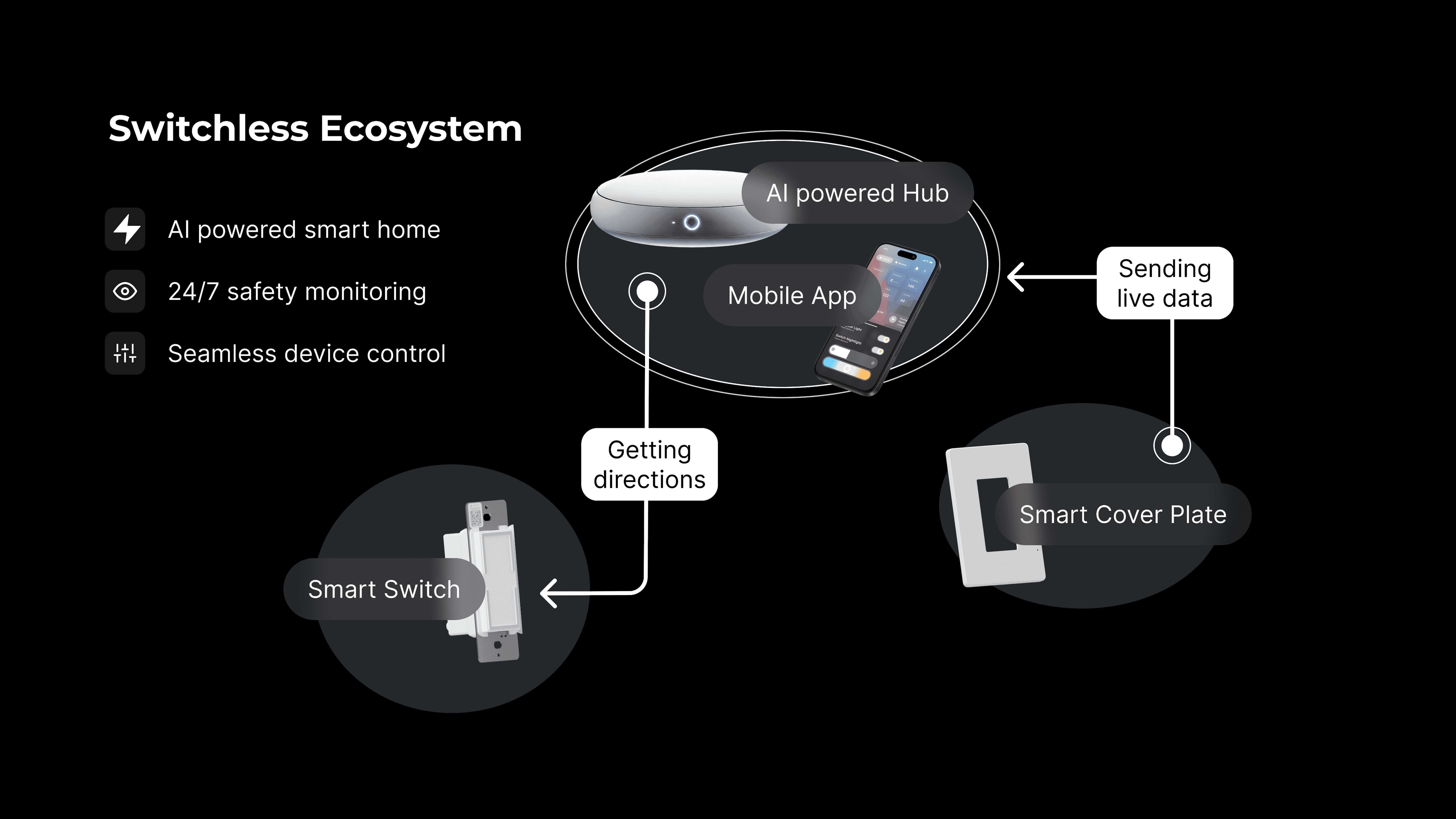
This is where my Cognitive Science background did the most work. I sat with the design team and mapped the end-to-end data flow between the physical sensors and the mobile interface: what the hub senses, what it sends, what the app shows, and how fast that loop has to close to feel real.

We matched the technical constraints to how people actually expect a home to respond, so feedback lands as real-time instead of laggy and confusing. Getting that mapping right early gave the rest of the design a reliable backbone to build on.
/

Process

Turning if-this-then-that logic into something that reads like a sentence.

The hardest part of any automation tool is the conditional logic. Trigger a routine when humidity passes a threshold, or when a room is occupied after dark, and you quickly drown the user in variables.

Our answer was the Automation Builder, where we broke that multi-variable logic into a guided, step-by-step flow that feels closer to a conversation than a settings panel. The goal across the whole platform was the same: keep the technical complexity working underneath, and keep it invisible on top.

We led the end-to-end design of a cohesive hardware-integrated ecosystem from scratch, focusing on democratizing home automation for mass-market users.

/

Process

One design system, so every screen behaves the way you’d guess.

A single command center for a home that usually needs five apps.

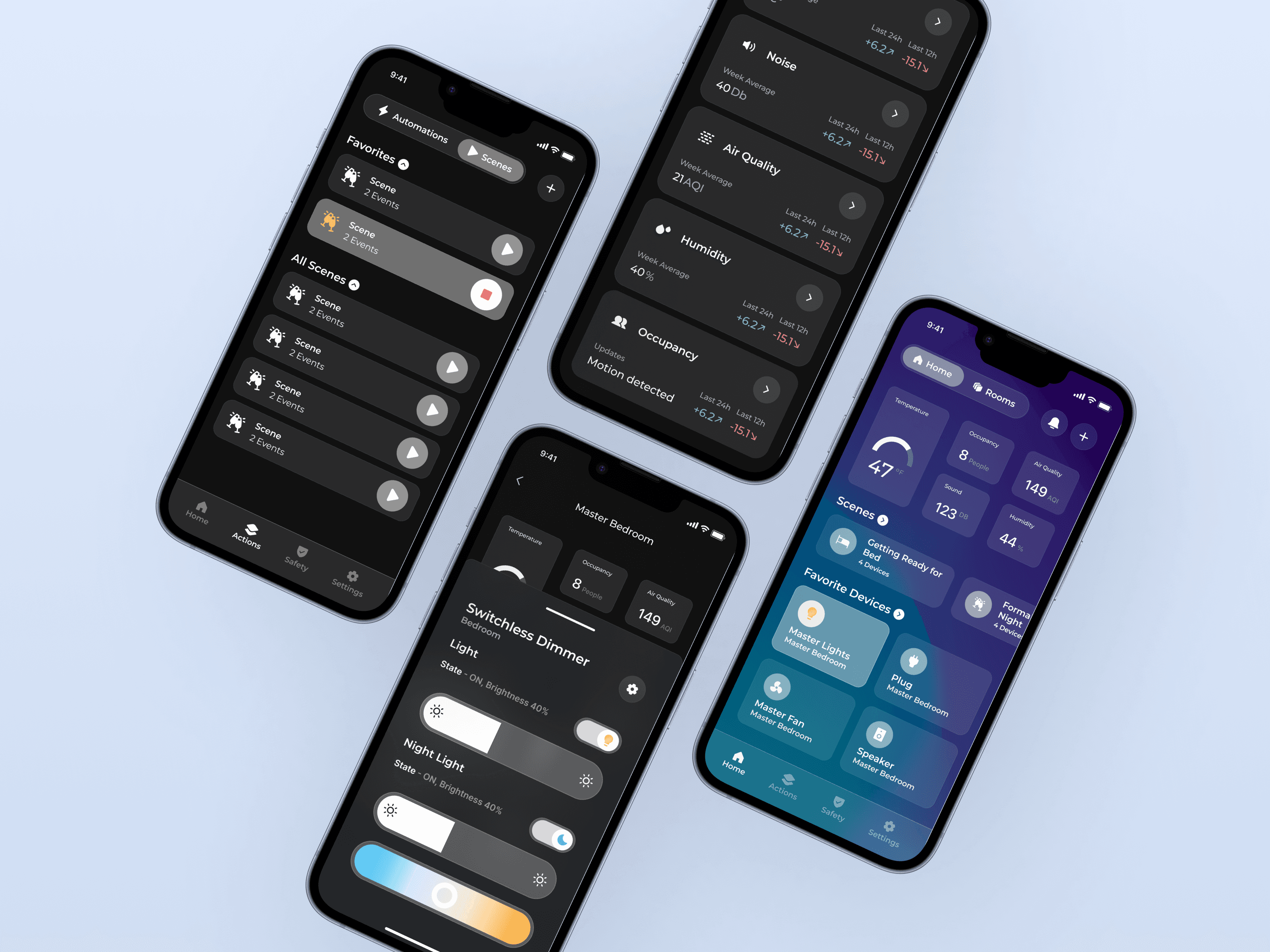
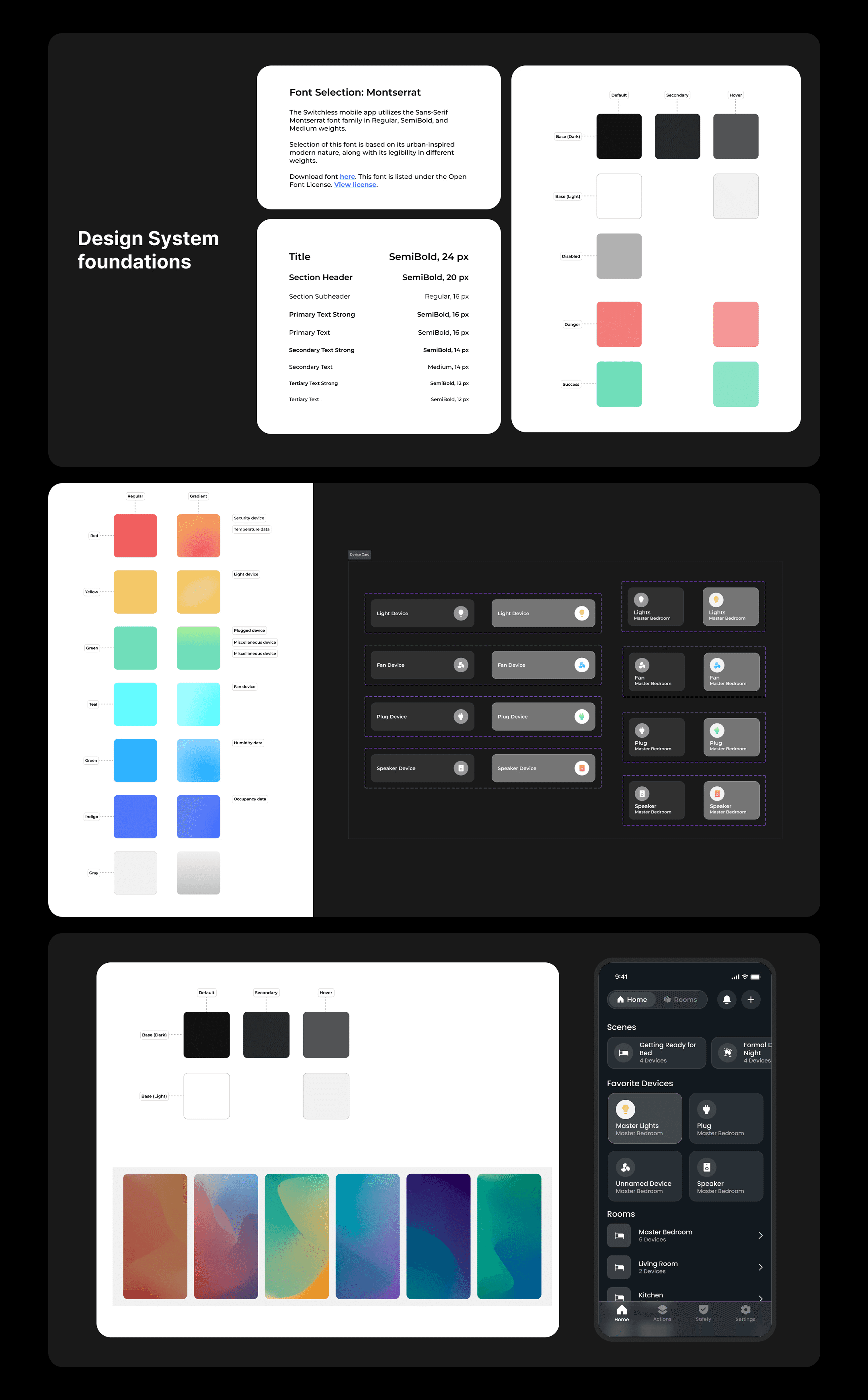
To make the app feel like one product instead of a stack of features, we built a shared set of reusable components and design tokens. We standardized the sensor iconography and the data-visualization cards so a humidity card and an air-quality card read the same way.

Whether you are scanning the dashboard or setting up an automation, the interface stays consistent and predictable, which is what lets a first-time user trust it.
/

Reflection

We threw out our first visual direction. The critiques made the product.

A single command center for a home that usually needs five apps.

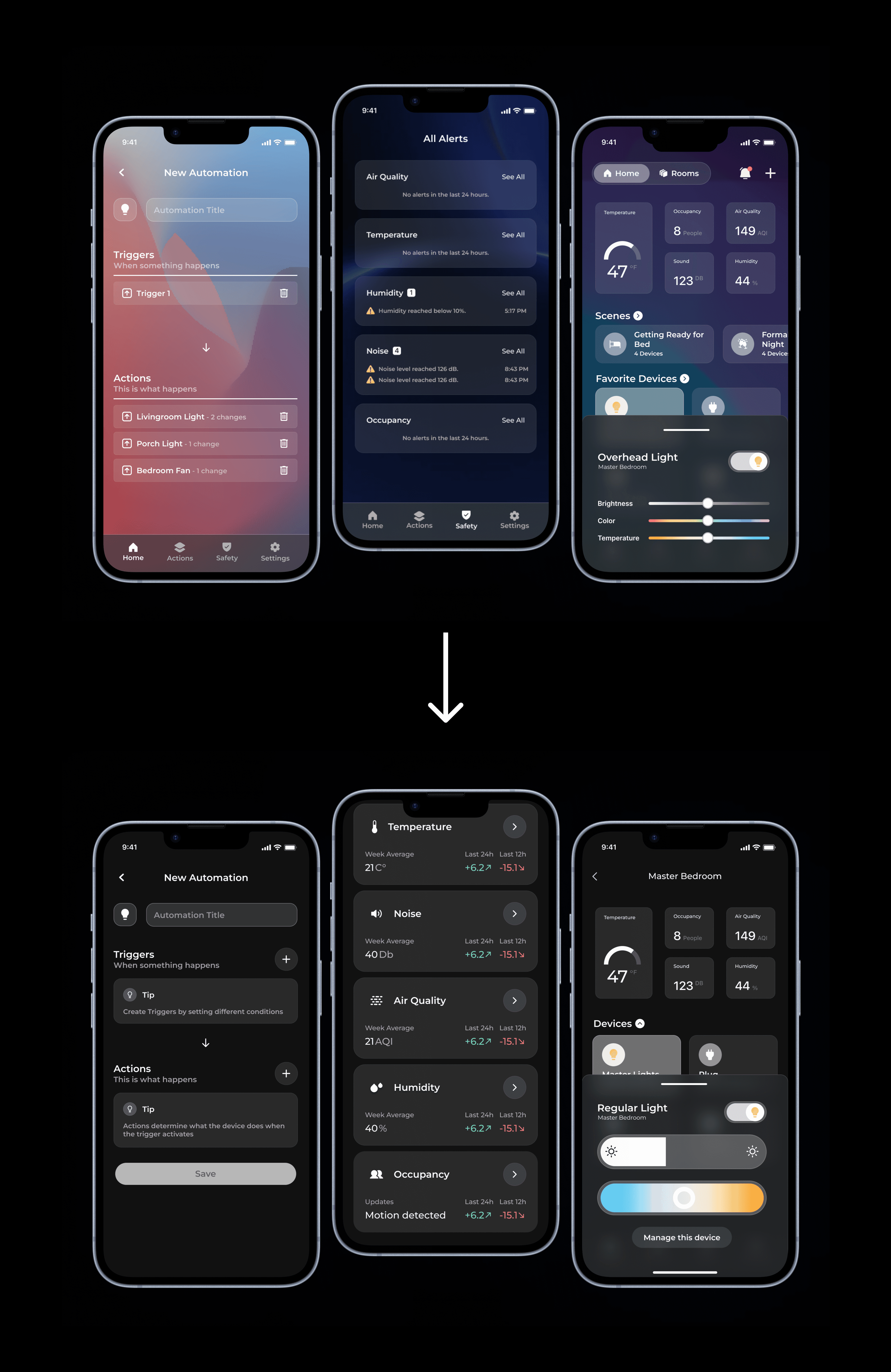
Our first concepts leaned on glassmorphism, and they did not hold up. Over the project our team ran continuous feedback loops with the CEO and stakeholders, weekly meetings plus near-daily check-ins, and used them to pressure-test what was actually working. By paying attention to what resonated and what didn't, we moved from those early glass concepts to a high-polish, card-based system with far more clarity.

The lesson I am taking from Switchless is that designing the part you can't see, the data flow and the mental model underneath, matters as much as the screens on top. That is the work my Cognitive Science training prepared me for, and it's the part I want to keep doing.
OTHER

PROJECTS

Get in touch