Trash Rush

(

(

8

8

)

)

An interactive mobile game developed in partnership with the non-profit PlanetFlip to gamify environmental education for young adults in Southern California.

TIMELINE

September 30 - December 12, 2025

ROLE

UI/UX Designer

TOOLS

Figma

Nano Banana

TEAM
TEAM

Linh Dinh

Yalu Ouyang

Brandon Hirano

Ryan Lee

Colin Sutedja

Regine Valdez

/

Overview

A narrative-driven game that teaches you to sort your trash.

Built for the nonprofit PlanetFlip, Trash Rush guides players through real-world sorting challenges and turns a complex environmental problem into something you actually want to engage with. The bet was that a game could teach what a recycling guide can't, by making the learning feel like play. My role was UI/UX designer on a team of seven.

We led the end-to-end design of a cohesive hardware-integrated ecosystem from scratch, focusing on democratizing home automation for mass-market users.

/

Overview

A narrative-driven game that teaches you to sort your trash.

Built for the nonprofit PlanetFlip, Trash Rush guides players through real-world sorting challenges and turns a complex environmental problem into something you actually want to engage with. The bet was that a game could teach what a recycling guide can't, by making the learning feel like play. My role was UI/UX designer on a team of seven.

/

The problem

San Diego's existing tools tell you what's recyclable. They don't teach you.
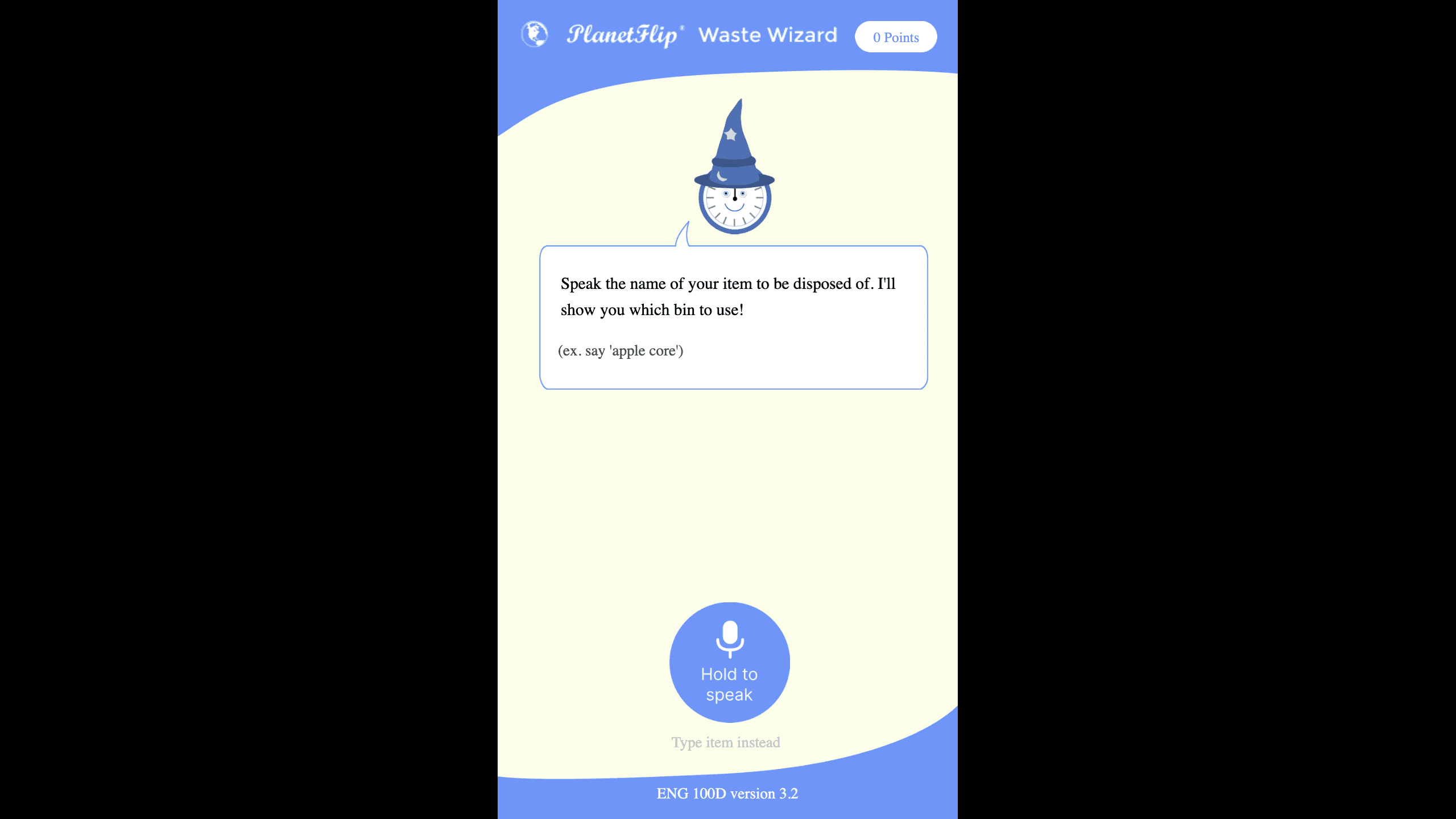
We researched existing San Diego tools like the "Waste Wizard" and found a clear gap: they give you a quick answer for a single item, but they never actually teach you how to categorize the ambiguous stuff. That's the hard part, and it's where people get it wrong, which drives up contamination in local ecosystems. So we aimed the game squarely at the gray-area items, the ones the lookup tools leave you guessing on.

We led the end-to-end design of a cohesive hardware-integrated ecosystem from scratch, focusing on democratizing home automation for mass-market users.

/

Process: building a world worth exploring

I illustrated the spaces so learning felt soft, not stressful.

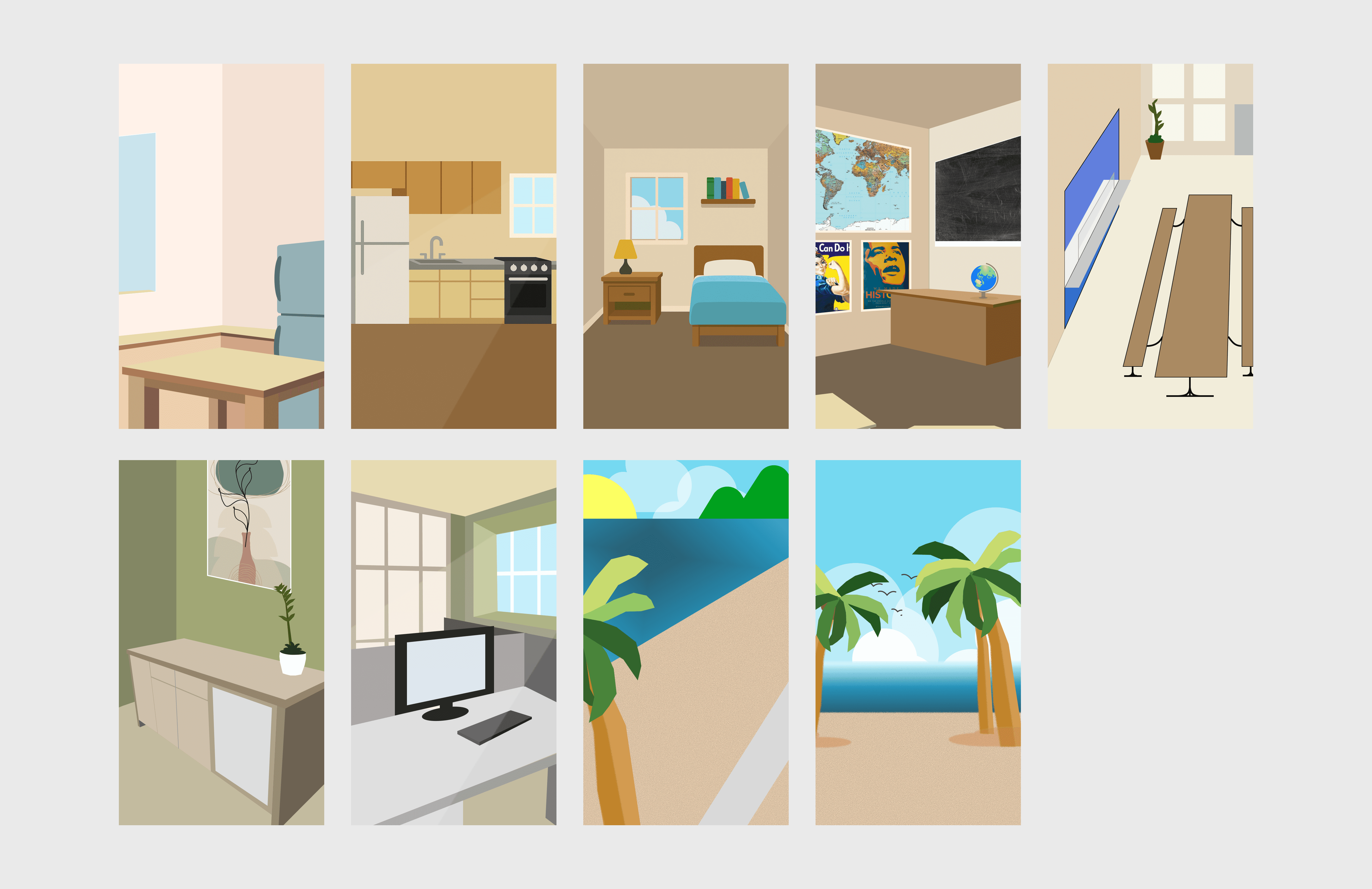
To ground the game in real life, I personally illustrated the Kitchen and Bedroom backgrounds and designed the waste assets for the home scenario. We used a minimalist pastel palette and rounded shapes on purpose: a "soft" aesthetic that invites exploration instead of triggering the anxiety people often feel about getting recycling wrong. The visual tone is doing real work here, lowering the stakes so players are willing to experiment and learn.
/

Process: motivation through characters

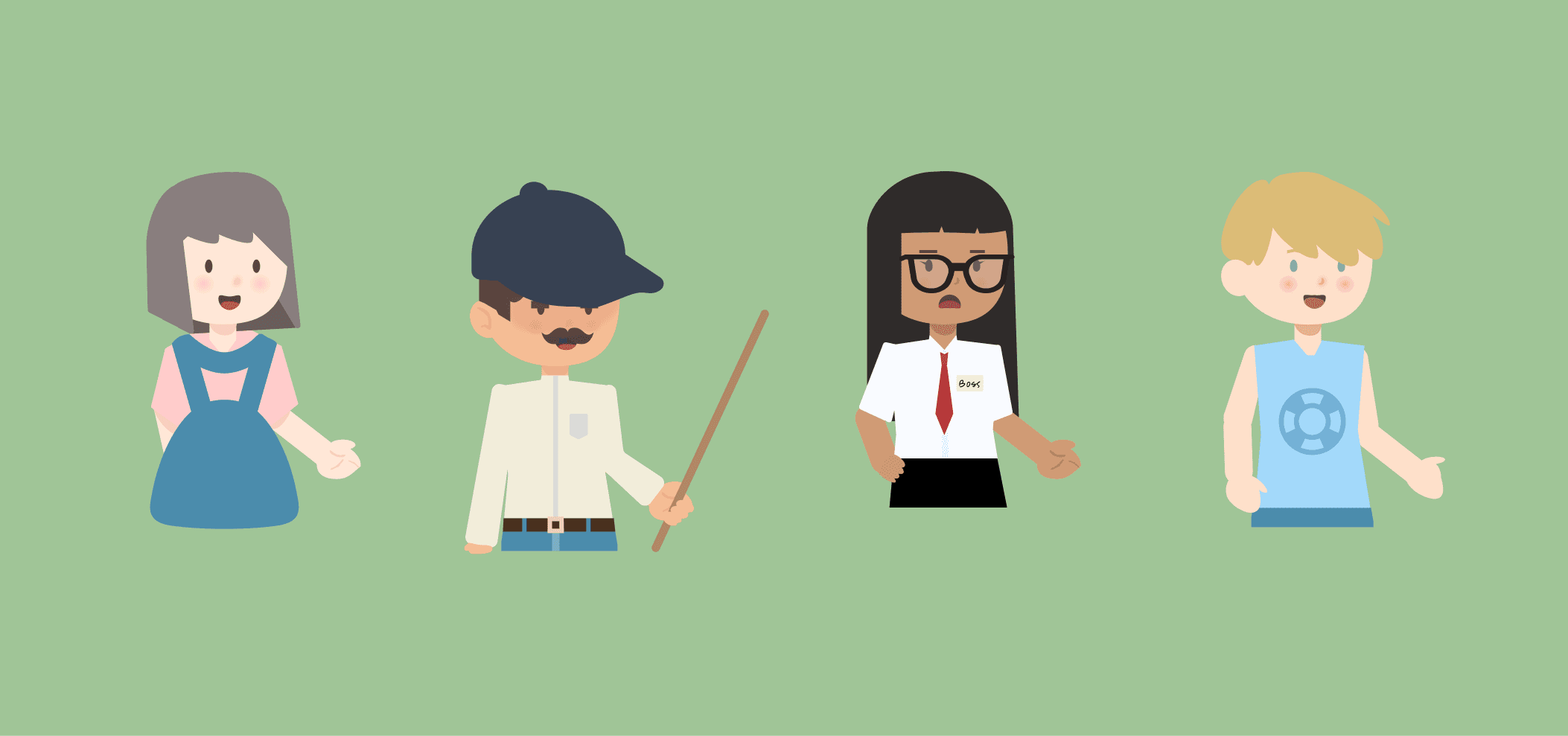
"Mom" and the "Janitor" turn instructions into a conversation.
A game that only instructs gets boring fast, so we made it interactive through NPC characters like "Mom" and the "Janitor" who give context-specific dialogue as you play. Paired with a points system, that narrative hook gives players a reason to come back and actually master the material instead of quitting after one round. The characters were hand-drawn in Figma by my teammate Linh, and they're a big part of why the game has personality.

We led the end-to-end design of a cohesive hardware-integrated ecosystem from scratch, focusing on democratizing home automation for mass-market users.

/

Outcomes & reflection

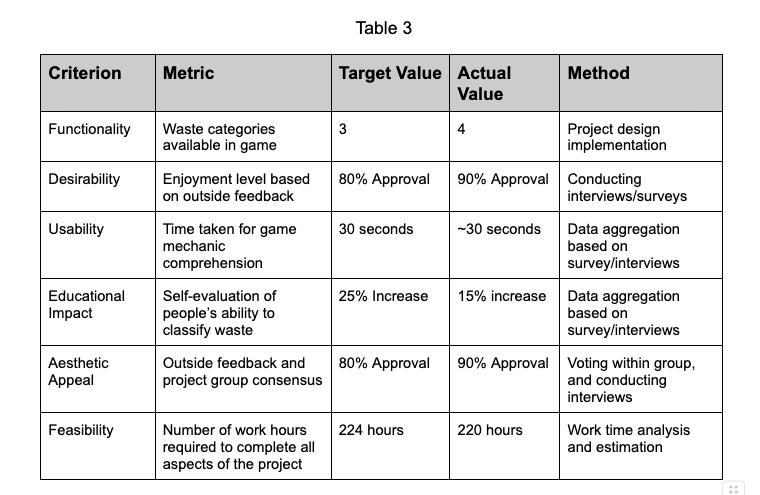
90% liked how it looked, and they sorted 15% more accurately after one session.

A narrative-driven game that teaches you to sort your trash.

Testing with UCSD students backed up the design: a 90% aesthetic approval rating, and more importantly, a measurable 15% increase in sorting accuracy for difficult waste items after just one playthrough. That second number is the one I care about, because it means the game didn't just look good, it changed what people could do. The takeaway for me is that the "soft" visual choices and the character-driven motivation weren't decoration, they were the mechanism that made the learning stick.
OTHER

PROJECTS
Get in touch