Work · ChampDiff • In development 2026
A game where friends race to guess League champions
- Problem
In a race, clues are also a leak. If you can see a friend's clues, you can copy them. Rivals had to feel close without helping each other.
- My call
Rivals see your attempts and score, never your clues. That's enough to feel a friend two guesses ahead of you, and not enough to copy them.
- Result
It runs for my friends while Riot reviews it. It only goes public if Riot says yes.
- Role
Solo. I designed it and made every product call, in English and Korean. AI agents wrote the code, and I reviewed it.
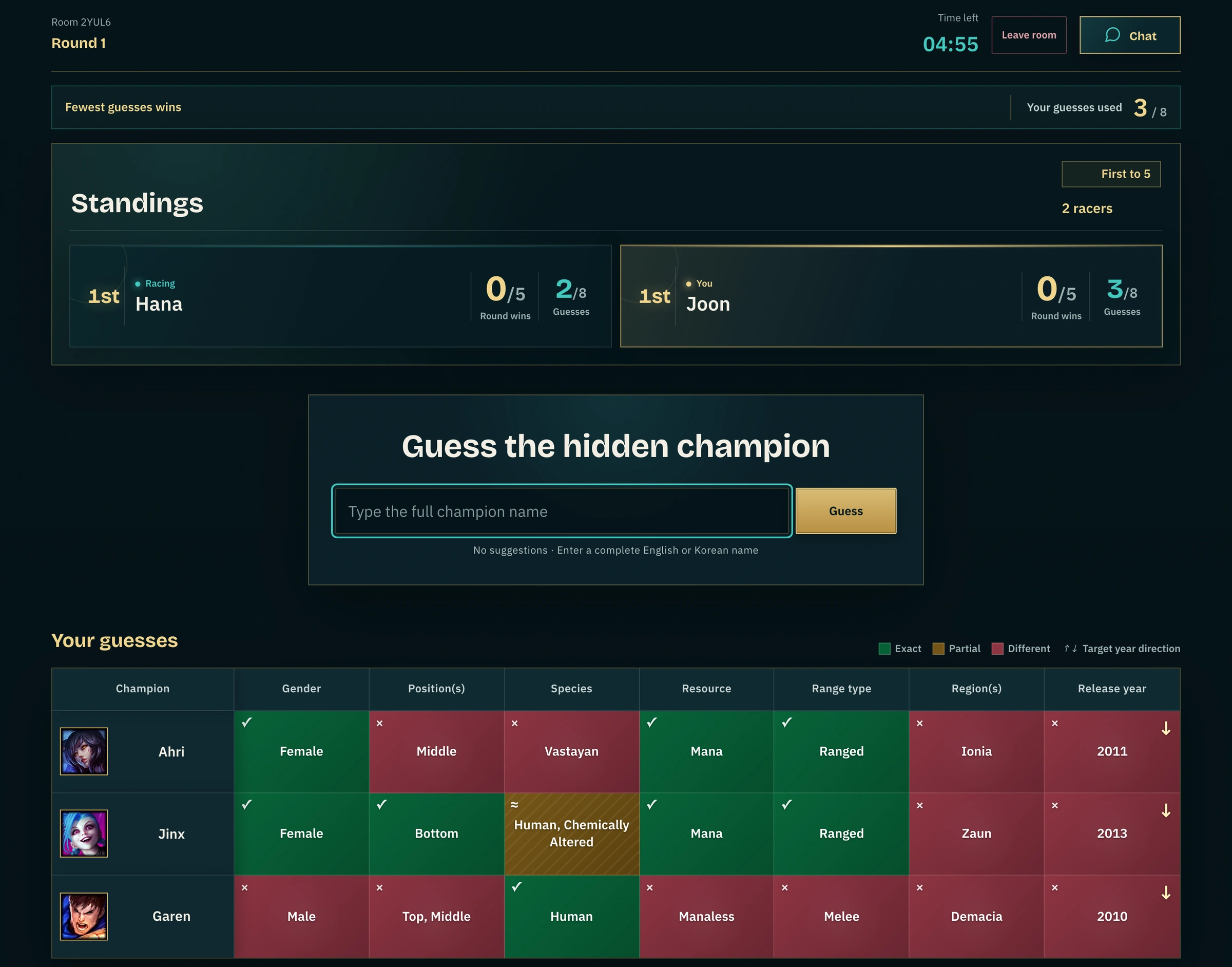
Standings on top, your private clues below. 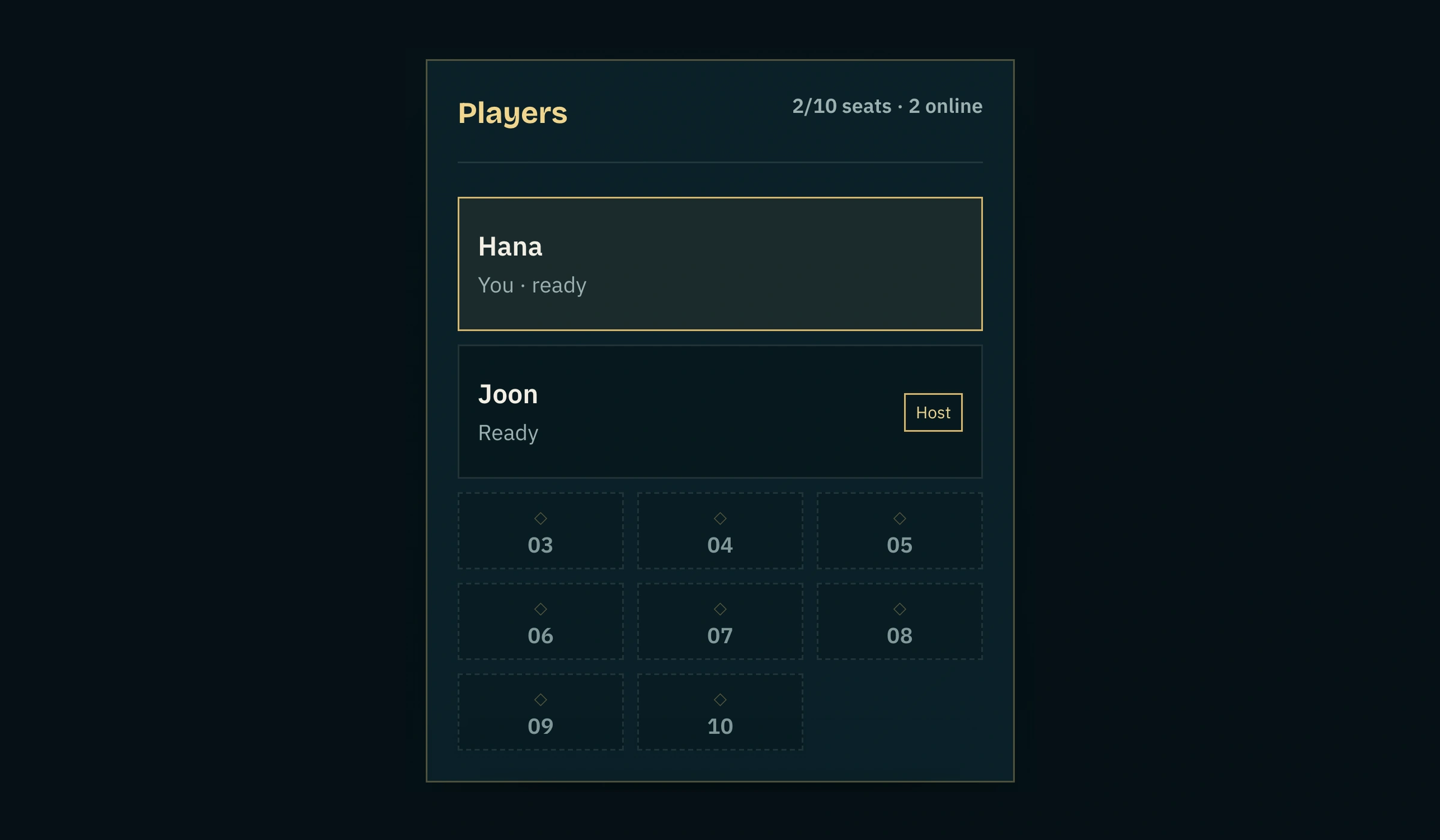
All ten seats show on a phone, so a room never looks full at four. 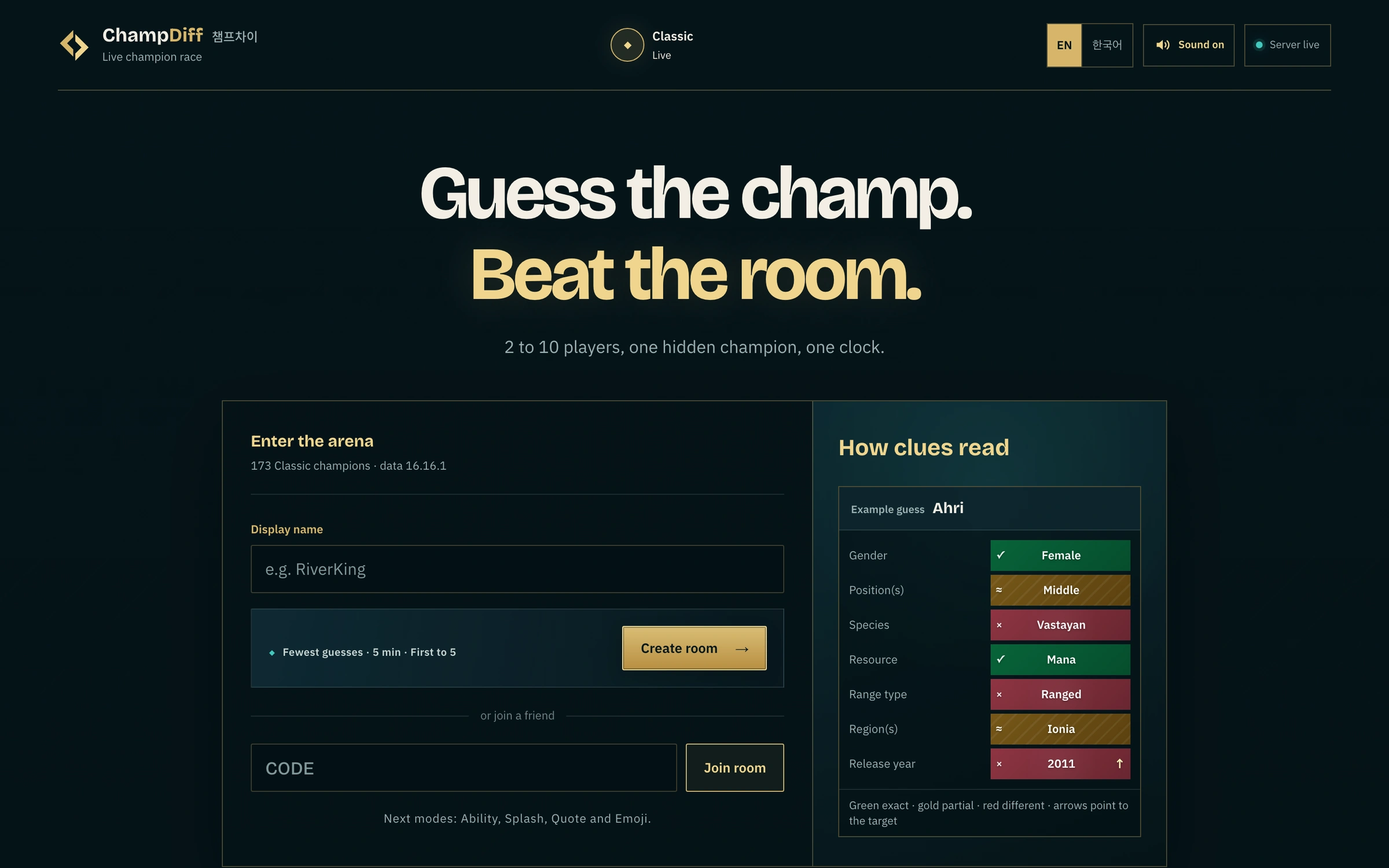
Create a room, or join one with a code.
- Role
- Product Design, UX Writing (EN, KO), Product Direction
- Timeline
- August 2026
- Team
- Solo
- Tools
- TypeScript, WebSockets, Redis, Vercel, Codex, Claude Code
- Status
- In development
- Players racing in one room
- 10
- Champions in the game
- 173
- Languages, down to the champion search
- 2
Problem
Rivals need to feel close without helping each other.
In a solo puzzle, your clues are the whole game. In a race, they're also a leak. If you can see a friend's clues, you can copy them. So rivals had to feel close without helping.
Process
Rivals see your attempts and score, never your clues.
I split what you know from what rivals see. Your clue rows stay private. Everyone else sees your attempts and score. The server owns the answer. Pressure comes from knowing someone is close, not from knowing what they know.

Process
I show all ten seats on a phone, not just four.
To save space, I first showed only three open seats. Hosts read that as a four-person room. So I reversed it. All ten seats now show as small tiles.
Reflection
It runs for my friends while Riot reviews it.
It only goes public if Riot's review says yes. I built the game first and asked later. Next time, I'd talk to the rights holder in week one.
For now, it runs for my friends and me.